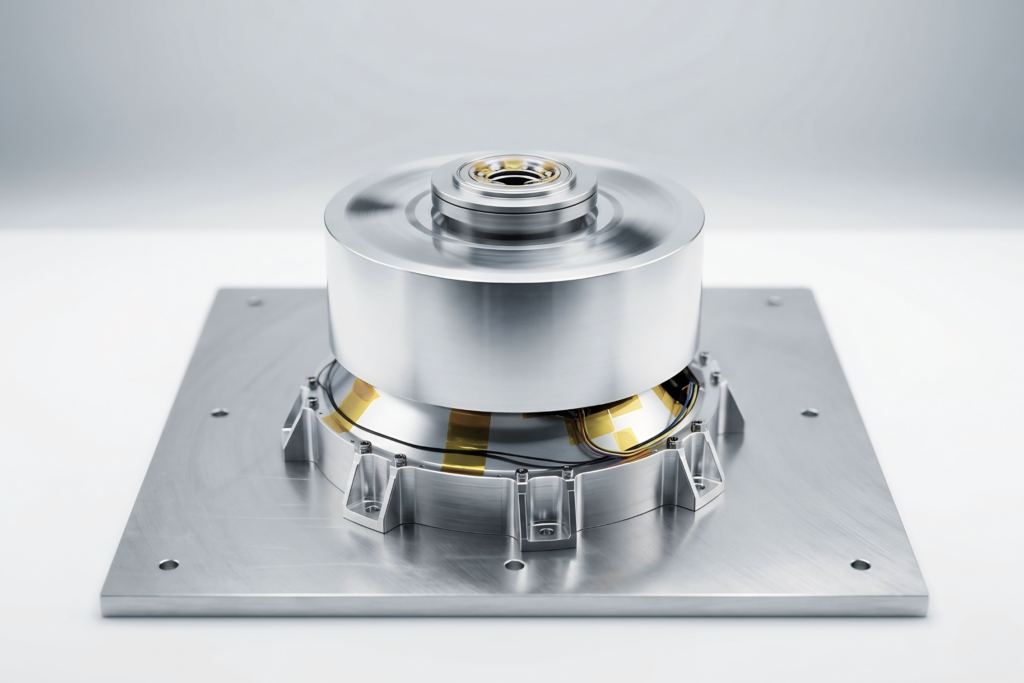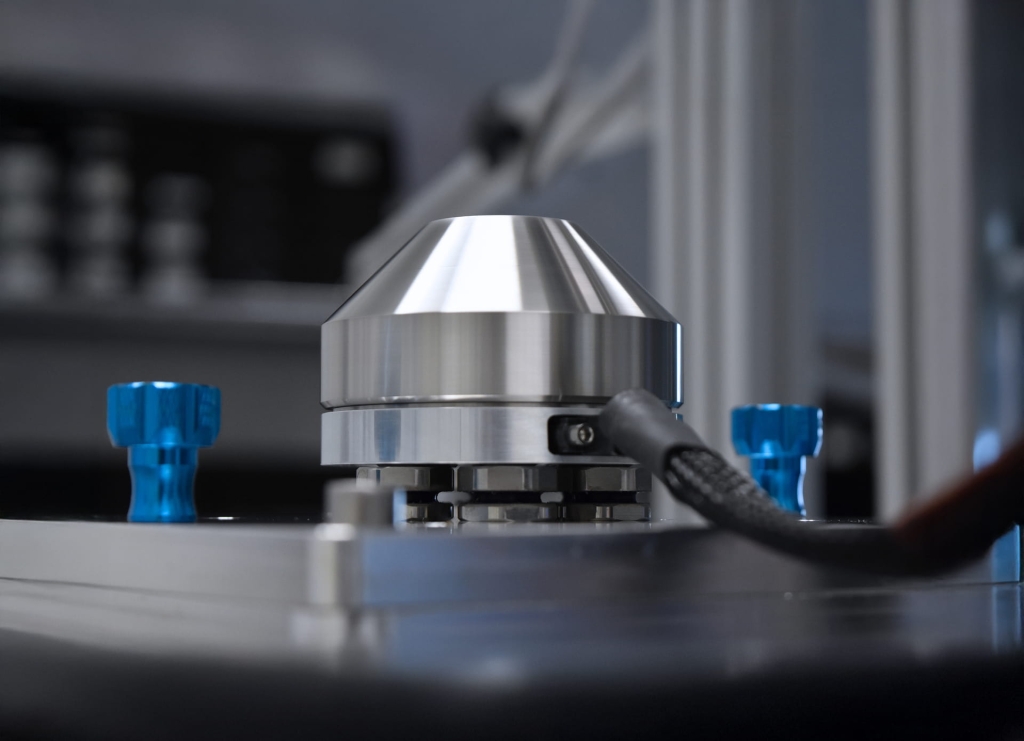
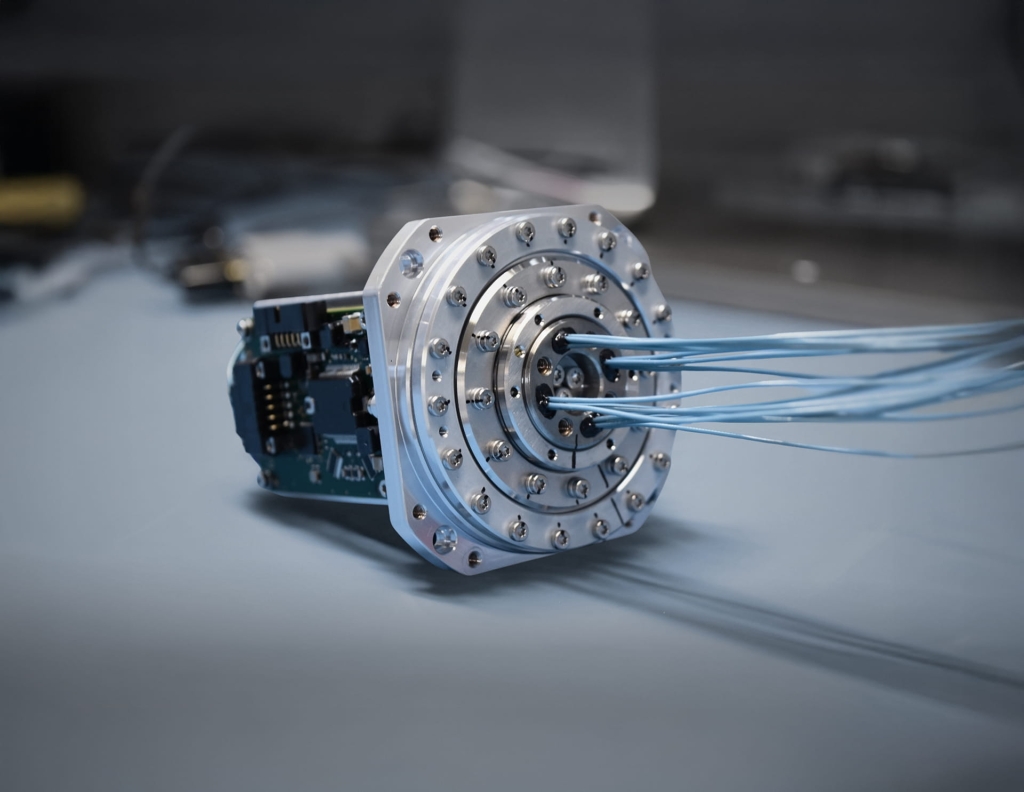




A reaction wheel’s lifetime depends first on its bearings and their lubrication, then on how it is operated and on its environment. Before launch, only qualification and life testing can demonstrate it.
Why lifetime is critical
A reaction wheel spins non-stop for the entire mission. It is one of the most mechanically demanding components of the attitude control system. A failure costs a redundancy at best and degrades the whole mission at worst. For an operator, wheel longevity is directly tied to the satellite’s return on investment.
Bearings and lubrication: the main factor
Bearings carry the flywheel through billions of revolutions. Their lubricant must stay effective for years, in vacuum, without evaporating or degrading. When lubrication deteriorates, friction torque rises, driving up current draw and heat, and eventually leading to failure. Bearing preload, cleanliness and assembly quality all play a decisive role.
Speed profile and zero crossings
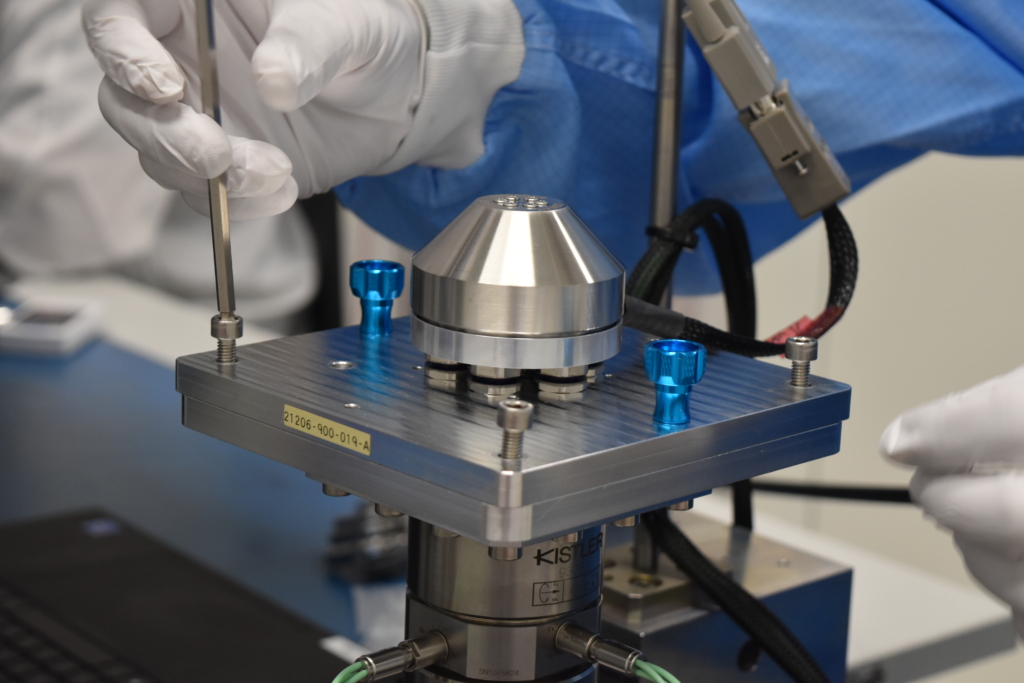
Running around zero speed is demanding: the lubricant film forms poorly at very low speed, and repeated direction reversals stress the bearings. Conversely, sustained high speed increases heat and wear.
That is why many missions run their wheels around a bias speed that avoids frequent zero crossings.
Thermal and radiation environment
Temperature affects lubricant viscosity and material behaviour. When electronics are integrated into the wheel, they must also withstand radiation throughout the mission, both total dose and single-event effects.
How to demonstrate lifetime before launch
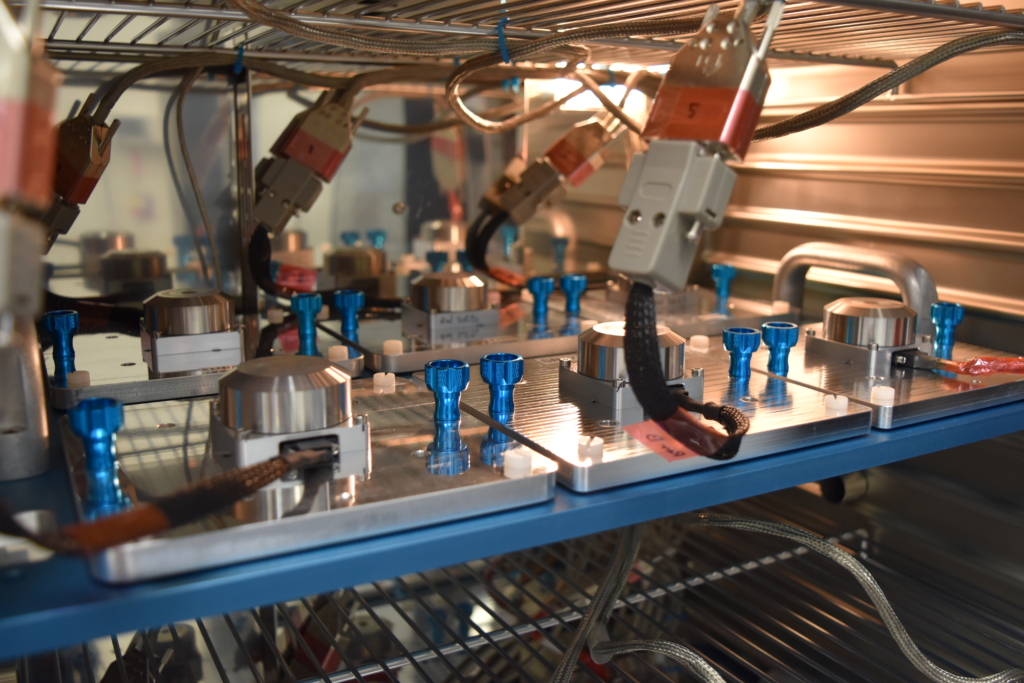
- Qualification testing to ECSS standards: vibration, shock, thermal vacuum, electromagnetic compatibility.
- Life testing, in real time or accelerated, reproducing the mission profile.
- Parameter monitoring during testing, especially friction torque and current.
- Flight heritage, which confirms in real conditions what testing has shown.
Comat’s approach: tested to outlast your mission
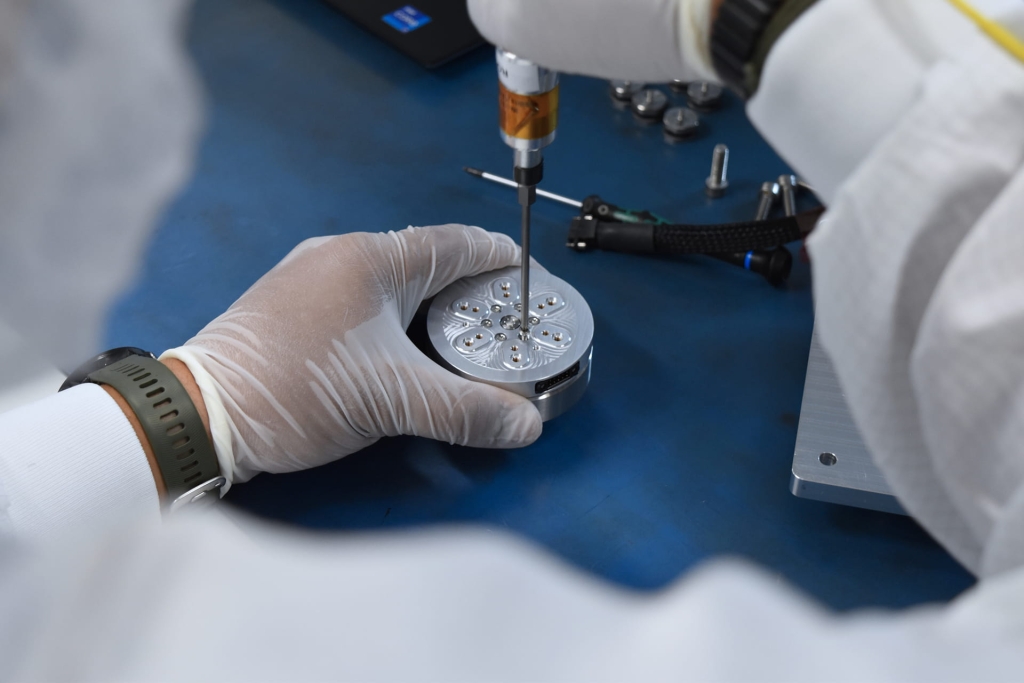
At Comat, longevity is not assumed, it is demonstrated. Every design goes through demanding test campaigns, and more than 200 Comat units are in orbit today.
Monitoring wear in orbit
In flight, trends in friction torque, current draw and wheel temperature help anticipate wear. Tracking this telemetry lets operators adapt how the wheel is used long before a failure.
Frequently asked questions
It is designed to cover the full mission duration, commonly from 5 to more than 15 years depending on the orbit and satellite type.
No. That is why missions carry a redundant wheel, and why design quality and ground testing are essential.
A test that stresses the wheel more intensely than the real mission, for example in speed or cycles, to compress time. It must be designed carefully to remain representative of real wear mechanisms.